
01 — Copy-paste every week
Someone exports from Shopify, Meta, Google Ads, Klaviyo, and ShipStation or the 3PL portal, then pastes it all into the same spreadsheet. It takes hours, and it only works when that one person remembers how.

Your numbers live in Shopify, Meta, Google Ads, Klaviyo, the 3PL, and a few spreadsheets. Cadence Ridge connects them into one scheduled report, flags where the tools disagree, and puts it in front of a person before anyone acts on it.
For online stores of any size. Your team makes every decision; the report never changes anything on its own.
Nobody set out to run the business from a spreadsheet rebuilt every Monday. It happens because each tool reports on its own, and someone has to stitch them together.
Someone exports from Shopify, Meta, Google Ads, Klaviyo, and ShipStation or the 3PL portal, then pastes it all into the same spreadsheet. It takes hours, and it only works when that one person remembers how.
Shopify says one revenue figure, the ad platforms claim another, and the 3PL count doesn't match orders shipped. The meeting turns into a debate about which number is right instead of what to do about it.
By the time the weekly numbers are ready, the reorder already went out, the budget already moved, or the stockout already happened. The report explains last week instead of shaping this one.
The metrics below are examples. We start from the numbers your team already uses and agree on the list in writing.
Orders, refunds, and products from Shopify, WooCommerce, or BigCommerce; spend from Meta and Google Ads; email and SMS results from Klaviyo; shipments from ShipStation or your 3PL. Pulled automatically, not exported by hand.
Rules you approve line the sources up: same date range, same time zone, refunds and test orders handled the same way. When two tools disagree beyond the tolerance you set, the gap is flagged instead of quietly averaged away.
A weekly or daily view with the metrics your team already argues about, for example revenue, orders, AOV, contribution margin inputs, ad spend and MER, returns rate, stockouts, and fulfillment delays. It lives in a tool your brand owns.
The report goes to the people who use it, with mismatches and unusual moves highlighted first. A person on your team reviews it before anything is acted on.
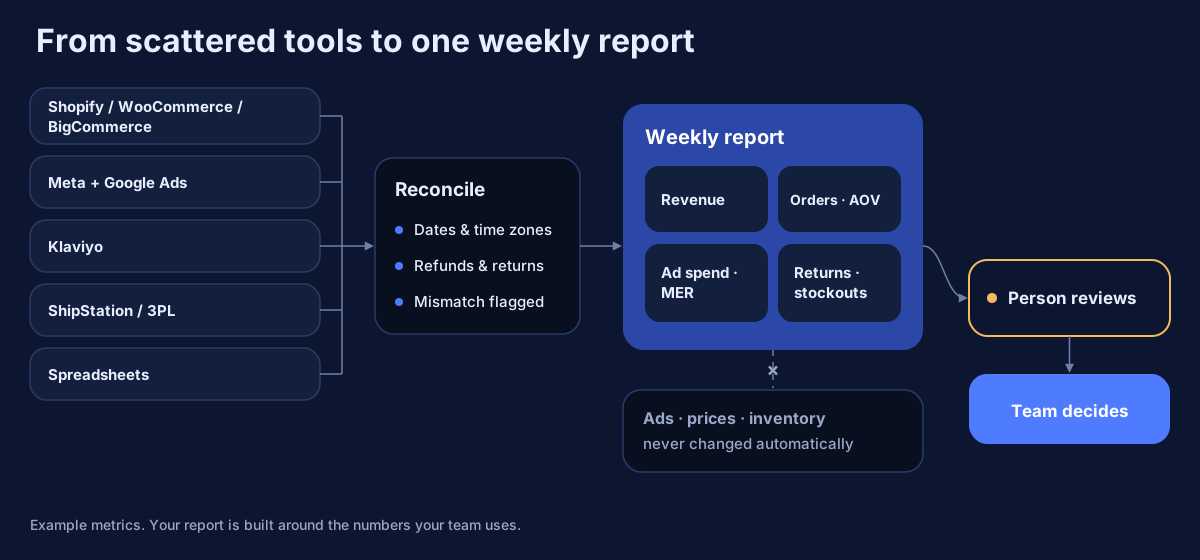
The system pulls, reconciles, flags, and sends. It never pauses a campaign, moves a budget, changes a price, or adjusts inventory on its own. Mismatches it can't explain go to a named person instead of being guessed, and nobody acts on a number until that person has reviewed it.
Before go-live and again after the first weeks of real use: hours spent building the report, time from the end of the week to a report in hand, and the number of mismatches between tools caught before the report goes out. We don't promise specific numbers. We measure them and show you what changed.
A first weekly report from two to four sources usually starts as a Workflow Quick Win. A dashboard across more tools, or separate reports for several teams, is closer to a Department System. The price moves with the number of sources, how messy the reconciliation is, and what each tool's API allows.
Typically included
Not included
Clear stages, visible decisions, and nothing scheduled until you sign off.
A 30-minute call plus a look at the report you build today. We confirm which numbers matter, where they come from, and where they disagree.
Sources, metrics, reconciliation rules, delivery schedule, and price, agreed in writing. No build starts until you approve it.
Read-only integration access where the tools allow it (no shared passwords), and a baseline of how long the report takes today.
We build the pipeline and report, then run it against past weeks and compare the output with what your team reported by hand.
The scheduled report starts only when you approve it.
The first reports are watched closely and checked against the baseline. Launch support terms follow your tier on the pricing page.
No. The system pulls, reconciles, flags, and sends. It never pauses a campaign, moves a budget, changes a price, or adjusts inventory on its own, and nobody acts on a number until a named person on your team has reviewed it.
Orders, refunds, and products from Shopify, WooCommerce, or BigCommerce; spend from Meta and Google Ads; email and SMS results from Klaviyo; and shipments from ShipStation or your 3PL. The written scope lists the sources you choose, and the price moves with how many there are and what each tool's API allows.
In a tool your brand owns, for example Google Sheets or Looker Studio. It comes with documentation on where each number comes from, how to change a rule, and what to do if a source breaks.
No. Bookkeeping, month-end close, and your accountant's P&L stay out of scope, as do attribution modeling and media-buying advice. The report brings your store, ad, email, and shipping numbers into one reviewed view.
Free 30-minute audit
A 30-minute call and a look at the report you build today. We trace where each number comes from and where the tools disagree, and you get a one-page snapshot of what we saw, whether or not we work together.
Tell us which store platform, ad, email, and shipping tools you use, and who builds the report today.
Audit My Weekly Report Free audit · Practical next steps · No obligationYour request goes directly to Cadence Ridge for review.
Free 30-minute audit
Two lines are enough. We reply by email, usually within one business day.
Thank you. We will review your answers and follow up using the email you provided.